لوپس، دومینیک مکآیور (1400). فلسفهی هنر کامپیوتری (حامد زمانی گندمانی، مترجم)، انتشارات چشمه- گیلگمش. (چاپ اثر اصلی 2009)
Allen, R. (1993). Representation, illusion, and the cinema. Cinema Journal, 32(2), 21-48. https://doi.org/10.2307/1225603 Atencia Linares, P. (2012). Fiction, nonfiction, and deceptive photographic representation. The Journal of Aesthetics and Art Criticism, 70(1), 19-30. https://www.researchgate.net/publication/263370053_Fiction_Nonfiction_and_Deceptive_Photographic_Representation Benovsky, J. (2011). Three kinds of realism about photographs. The Journal of Speculative Philosophy, 25(4), 375-395.
https://www.researchgate.net/publication/236785154_Three_Kinds_of_Realism_About_Photographs
Bergeron, V., & Lopes, D. M. (2012). Aesthetic theory and aesthetic science: Prospects for integration. In A. Shimamura & S. Palmer (Eds.), Aesthetic science: Connecting minds, brains, and experience (pp. 63-79). Oxford University Press. https://www.researchgate.net/publication/288726033_Aesthetic_Theory_and_Aesthetic_Science_Prospects_for_integration Casey, E. S. (1971). Imagination: imagining and the image. Philosophy and Phenomenological Research, 31(4), 475-490.
http://escasey.com/Article/Imagination_Imagining_and_the_Image.pdf
Dilworth, J. (2002). Varieties of visual representation. Canadian journal of philosophy, 32(2), 183-205.
https://doi.org/10.2307/40232147
Gabriel, F. G. (2010). Realism and realistic representation in the digital age. Journal of Film and Video, 62(3),3-16.
https://www.researchgate.net/publication/236780178_Realism_and_Realistic_Representation_in_the_Digital_Age
Goldberg, K. (1995-2004). Telegarden [Artwork]. https://hikmahemma.wordpress.com/2016/08/26/week-4-ken-goldberg-telegarden-1995/#jp-carousel-294 Hansen, M. B. N. (2004). New Philosophy for New Media. MIT press.
Hayles, N. K. (2008). Electronic Literature: New Horizons for the Literary. University of Notre Dame Press.
Hopkins, R. (2008). What do we see in film? The Journal of Aesthetics and Art Criticism, 66(2), 149-159.
https://onlinelibrary.wiley.com/doi/abs/10.1111/j.1540-6245.2008.00295.x
Kenney, K. (2004). Representation theory. In K. Smith, S. Moriarty, G. Barbatsis, & K. Kenney (Eds.), Handbook of Visual Communication (pp. 121-138). Routledge.
https://www.taylorfrancis.com/chapters/edit/10.4324/9781410611581-14/representation-theory-keith-kenney
Lopes, D. M. (1996). Understanding Pictures. Clarendon Press.
Lopes, D. M. (1997). Art media and the sense modalities: tactile pictures. The Philosophical Quarterly, 47(189), 425-440.
https://doi.org/10.1111/1467-9213.00069.
Lopes, D. M. (1998). Imagination, illusion and experience in film. Philosophical Studies, 89(2-3), 343-353.
https://philpapers.org/rec/LOPIIA
Lopes, D. M. (1999). Pictorial color: Aesthetics and cognitive science. Philosophical Psychology, 12(4), 415-428.
https://doi.org/10.1080/095150899105666
Lopes, D. M. (2000a). From languages of art to art in mind. Journal of Aesthetics and Art Criticism, 58(3), 227-231.
http://www.jstor.org/stable/432104
Lopes, D. M. (2000b). What is it like to see with your ears? The Representational Theory of Mind. Philosophical and Phenomenological Research, 60(2), 439-453.
https://www.jstor.org/stable/2653494
Lopes, D. M. (2002). Vision, touch, and the value of pictures. The British Journal of Aesthetics, 42(2), 191-201.
https://doi.org/10.1093/bjaesthetics/42.2.191
Lopes, D. M. (2003a). Pictures and the representational mind, . The Monist, 86(4), 632-652.
https://doi.org/10.2307/27903847
Lopes, D. M. (2004). Directive pictures. The Journal of Aesthetics and Art Criticism, 62(2), 189-196. https://doi.org/10.1111/j.1540-594X.2003. 0151.x
Lopes, D. M. (2005a). Sight and Sensibility: Evaluating Pictures. Clarendon Press.
Lopes, D. M. (2005b). The domain of depiction. In M. Kieran (Ed.), Contemporary Debates in Aesthetics and Philosophy of Art (pp. 160-175). Blackwell.
https://philpapers.org/rec/LOPTDO
Lopes, D. M. (2009). A philosophy of computer art [Falsafeye honare computeri] (Hamed Zamani Gandomani, Trans.) Cheshmeh-Gilgamesh. (Original work published 2009) (In Persian)
Lopes, D. M. (2010). Picture this: Image-based demonstratives. In C. Abell & K. Bantinaki (Eds.), Philosophical Perspectives on Depiction (pp. 52-80). Oxford University Press.
https://www.researchgate.net/publication/281787600_Picture_this_Image-based_Demonstratives
Lopes, D. M. (2011). An empathic eye. In A. Coplan & P. Goldie (Eds.), Empathy. Philosophical and Psychological Perspectives (pp. 118-133). Oxford Univerity Press.
https://www.researchgate.net/publication/295086482_An_Empathic_Eye
Lopes, D. M. (2014). Beyond Art. Oxford University Press.
Lopes, D. M. (2016b). In the eye of the beholder. In J. Dodd (Ed.), Art, Mind, and Narrative: Themes from the Work of Peter Goldie (pp. 223-240). Oxford University Press.
https://philpapers.org/rec/LOPITE-2
Lopes, D. M. (2018b). Being for Beauty: Aesthetic Agency and Value. Oxford University Press.
Lopes, D. M. (2024). Aesthetic Injustice. Oxford University Press.
Manovich, L. (2002). The Language of New Media. University of Toronto Press.
Nanay, B. (2010). Perception and imagination: Amodal perception as mental imagery. Philosophical Studies, 150(2), 239-254.
https://doi.org/10.1007/s11098-009-9407-5
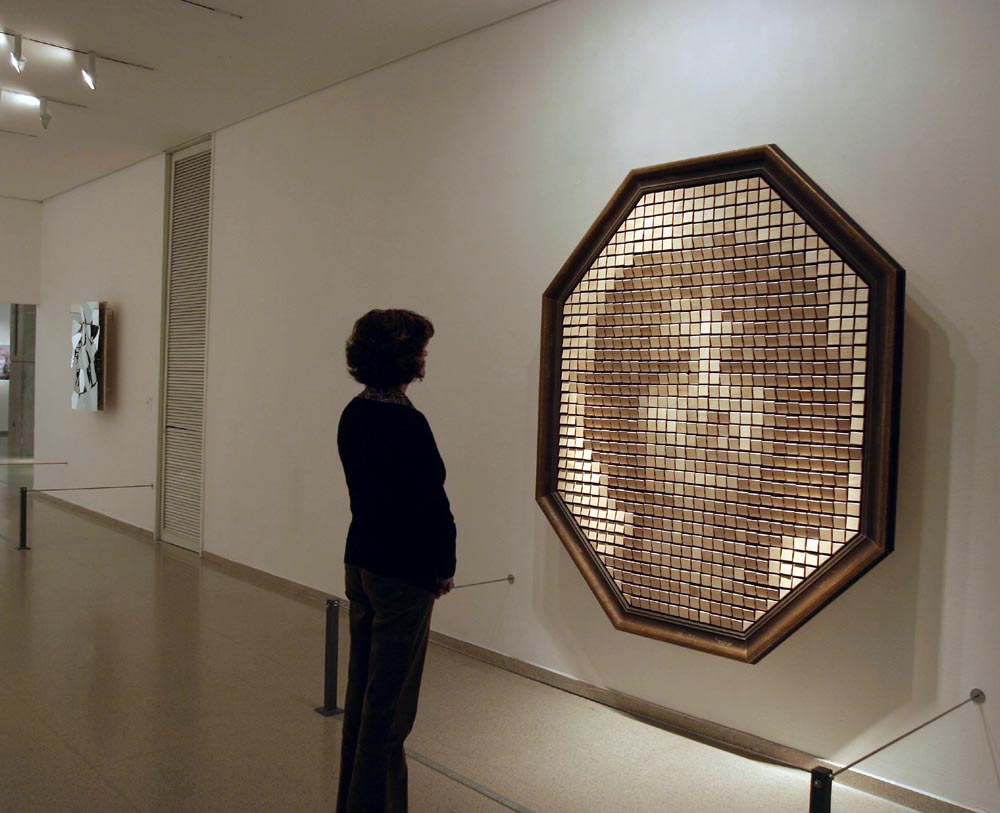
Novitz, D. (1975). Picturing. The Journal of Aesthetics and Art Criticism, 34(2), 145-155. https://doi.org/10.2307/430071 Rozin, D. (1999). Wooden mirror [Artwork].
https://www.smoothware.com/danny/woodenmirrormuseum.jpg
Ryan, M. L. (2001). Narrative as Virtual Reality: Immersion and Interactivity in Literature and Electronic Media. The Johns Hopkins UP.
Savedoff, B. E. (1992). Transforming images: Photographs of representations. The Journal of Aesthetics and Art Criticism, 50(2), 93-106.
https://academic.oup.com/jaac/article/50/2/93/6341396
Schellenberg, S. (2013). Belief and desire in imagination and immersion. The Journal of Philosophy, 110(9), 497-517.
https://doi.org/10.5840/jphil2013110914
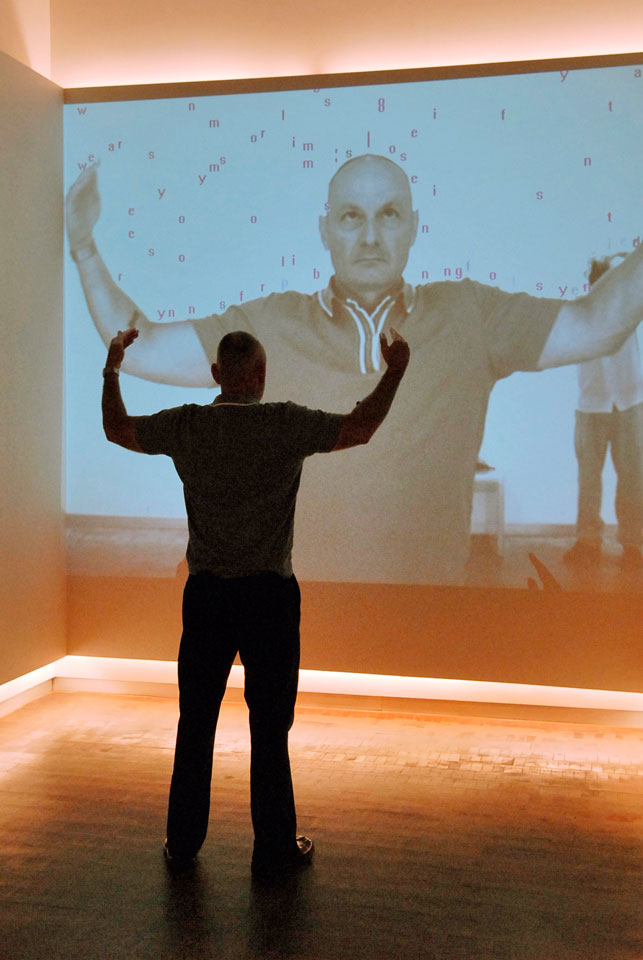
Shaw, J. (1995). Golden calf [Artwork]. /https://www.jeffreyshawcompendium.com/portfolio/golden-calf Snibbe, S. (1998). Boundary functions [Aertwork]. https://www.snibbe.com/art/boundaryfunctions?itemId=epqaydm4l29xczcb2ismnf47o2r2tm Utterback, C. and Archituv, R. (1999). Text rain [Artwork].
http://camilleutterback.com/wp2022/wp-content/gallery/text-rain/text_rain1_edit.jpg
Walton, K. (2002). Depiction, Perception, and Imagination: Responses to Richard Wollheim. The Journal of Aesthetics and Art Criticism, 60(1), 27-35.
Yamakawa, H. (2007). Kodama [Aerwork]. https://www.ycam.jp/en/archive/works/kodama/